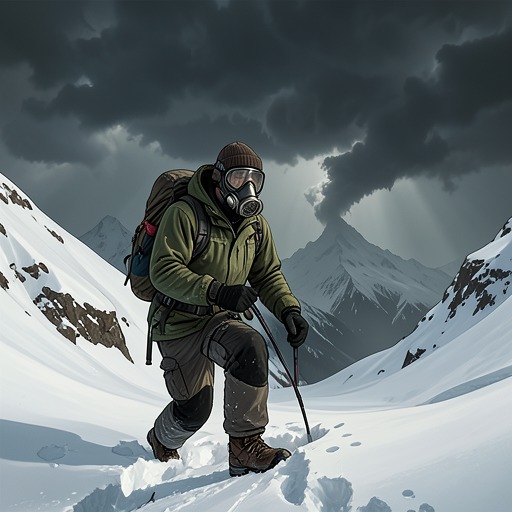
Paldor Peak
The ClimbPaldor Peak, a 5,900-meter mountain in the Ganesh Himal, was the setting for a winter training climb that helped determine who would proceed toward Everest with the Indonesian National Everest Expedition. In December 1995, 34 climbers attempted the peak; only 17 summited, and that outcome shaped the expedition’s subsequent team selection.
Setting and Training Climb
The training session began on December 15, 1995, while expedition leaders Anatoli Boukreev and Evgeny Vinogradski supervised it. Half of the 34 climbers attempting Paldor Peak had no technical mountaineering skills. They undertook 21 days of slow acclimatization in Nepal’s winter conditions before the climb, making the mountain a test of both physical preparation and the group’s ability to function at altitude.
Selection for Everest
On January 10, expedition leaders Ang Tshering, Vladimir Bashkirov, Evgeny Vinogradski, and Boukreev met in Kathmandu to coordinate plans and begin selecting the Everest team. Bashkirov and Vinogradski doubted that more than the 17 Paldor summiteers would make the final group. The training climb had sharply reduced the prospective team: reaching the summit did not automatically secure a place, but the number who succeeded set a practical upper bound on who might be selected.
Place in the Expedition
Paldor Peak’s role in the account is preparatory rather than incidental. The expedition used a prolonged winter climb to expose a largely inexperienced group to high-altitude conditions before committing to the far greater demands of Everest. The 17 successful summiteers became the reference point for team selection, while the broad attrition on the mountain revealed how much the original group had narrowed before the main expedition began.